Category: Uncategorized

  • Year-Round Digital Marketing Calendar for Calgary Businesses 2026

    Year-Round Digital Marketing Calendar for Calgary Businesses 2026

    Year-Round Digital Marketing Calendar for Calgary Businesses 2026

    A month-by-month marketing roadmap built specifically for Calgary businesses — from Stampede to ski season.

    One of the biggest challenges for Calgary business owners is knowing when to do what. Should you ramp up ads before Stampede? When is the best time to launch a new website? What about tax season marketing?

    At SoftYoug, we’ve helped dozens of Calgary businesses plan their marketing calendars. The key is to align your marketing activities with what’s happening in the city — because Calgary has its own unique rhythm. Stampede, ski season, the Calgary International Film Festival, and our famously unpredictable weather all create opportunities for smart marketing.

    Here’s your month-by-month digital marketing calendar for 2026.

    How to Plan Your Marketing Year

    Before we dive into the months, here’s a quick framework for planning ahead:

    • Start with the big events — Stampede (July), Christmas (December), and any industry-specific conferences or trade shows.
    • Work backwards — If Stampede starts July 10, your content planning should begin in May and your campaigns should launch in June.
    • Build seasonal campaigns — Calgary has four distinct seasons. Tailor your messaging, visuals, and offers to what’s happening outside.
    • Leave room for spontaneity — Calgary weather can be unpredictable (snow in May, anyone?). Flexibility is key.
    • Plan content themes quarterly — This saves time and ensures consistency across all your channels.

    Month-by-Month Marketing Activities

    January — New Year, New Goals

    • Post your New Year’s messaging — resolutions, fresh starts, goal-setting.
    • Review your 2025 analytics to identify what worked and what didn’t.
    • Set your 2026 marketing goals and budget.
    • Launch a New Year promotion — Calgarians are motivated in January.
    • Update your Google Business Profile with fresh photos and posts.

    February — Cozy & Connected

    • Run a Family Day campaign (third Monday in February).
    • Share Valentine’s Day content — partner with other Calgary businesses for cross-promotions.
    • Create winter-themed content — skiing at Sunshine, skating at Prince’s Island Park.
    • Start planning your Q1 email nurture sequences.

    March — Spring Prep & Tax Season

    • Prepare spring campaigns — as Calgary thaws, customers are ready for change.
    • Tax season content — if you’re an accountant or financial service, ramp up now.
    • Audit your SEO and website ahead of spring busy season.
    • Share St. Patrick’s Day content if relevant to your brand.

    April — Spring Cleaning (Digital Edition)

    • Website spring cleaning — update content, fix broken links, refresh design.
    • Launch spring promotions — Calgarians emerge from hibernation ready to spend.
    • Start Easter campaigns (if relevant).
    • Review and refresh your social media bios and profiles.

    May — Patio Season Begins

    • Calgary’s patio season starts — promote outdoor dining, events, or services.
    • Begin Stampede content planning — yes, it’s that early.
    • Victoria Day long weekend campaigns (May 18).
    • Ramp up local SEO for summer searches.

    June — Stampede Prep Mode

    • Launch pre-Stampede campaigns — early bird tickets, Stampede-themed offers.
    • Update Google Business Profile with special Stampede hours.
    • Create Calgary-specific content celebrating summer in the city.
    • National Indigenous History Month content — respectful and meaningful.

    July — Stampede & Summer Heat

    • The Calgary Stampede (July 10–19) — your biggest marketing opportunity of the year. Run Stampede-themed promos, contests, and content.
    • Post about summer activities in and around Calgary.
    • Run Canada Day content (July 1) — patriotic, celebratory.
    • Monitor your social engagement closely — this is a high-traffic month.

    August — Last Call for Summer

    • Back-to-school campaigns for families heading into the school year.
    • Heritage Day content (first Monday in August).
    • Promote late summer sales — Calgarians squeeze in final summer fun.
    • Begin fall campaign planning.

    September — Fall Forward

    • Labour Day campaigns (first Monday).
    • Launch fall campaigns — cozy, harvest-themed content.
    • Calgary International Film Festival — content opportunities if relevant.
    • Q4 planning begins — holiday campaigns, budget reviews.

    October — Spooky &amp Strategic

    • Thanksgiving (Canadian) content (second Monday).
    • Halloween campaigns — fun, shareable content and promotions.
    • Launch early holiday prep — email list growth, ad testing for Q4.
    • Update your website for holiday traffic.

    November — Holiday Launch

    • Launch Black Friday / Cyber Monday campaigns (late November).
    • Begin Christmas content — holiday gift guides, seasonal offers.
    • Remembrance Day content (November 11) — respectful, appropriate.
    • Run year-end email campaigns for existing customers.

    December — Celebrate &amp. Reflect

    • Full Christmas and holiday campaigns — gift guides, party promos.
    • Share year-in-review content celebrating your achievements.
    • Run a New Year’s Eve campaign.
    • Prepare your 2027 marketing plan based on 2026 data.
    • Send thank-you emails to your best customers.

    Pro Tips for Your 2026 Marketing Calendar

    • Batch your content creation — Dedicate one day per month to creating all your social posts for the next 4 weeks.
    • Automate where possible — Schedule emails and social posts in advance so you can focus on engagement.
    • Track Calgary-specific trends — Monitor what’s trending locally and jump on relevant conversations.
    • Reuse and repurpose — Turn a blog post into a video, an infographic, and three social posts. Maximize your content investment.
    • Stay flexible — Calgary’s economy and weather can change fast. Be ready to pivot your messaging.

    With this calendar as your guide, you’ll never wonder what to post or promote next. You’ll be ahead of the curve — and ahead of your competition.

    Build Your Custom 2026 Marketing Plan

    SoftYoug helps Calgary businesses create tailored marketing calendars and execute them flawlessly. Let’s plan your year together.

    Call us: 639-999-8193

    Email: contact@softyoug.ca

  • How to Build a Strong Online Reputation for Your Calgary Business

    How to Build a Strong Online Reputation for Your Calgary Business

    How to Build a Strong Online Reputation for Your Calgary Business

    In a tight-knit city like Calgary, your online reputation can make or break your business. Here’s how to build one that stands strong.

    Calgary is a big city with a small-town feel. Word travels fast — especially online. When someone searches for your business on Google, the first thing they see isn’t your website. It’s your reviews, your ratings, and what people are saying about you.

    At SoftYoug, we’ve seen firsthand how a strong online reputation can transform a Calgary business. More customers, higher trust, better search rankings, and ultimately more revenue. But building that reputation takes intention and consistency. Here’s exactly how to do it.

    Why Online Reputation Matters for Calgary Businesses

    Think about how Calgary consumers make decisions today:

    • 93% of consumers read online reviews before making a purchase decision.
    • 82% of Calgarians trust online reviews as much as personal recommendations from friends.
    • A one-star increase in your Google rating can lead to a 5–9% increase in revenue.
    • Businesses with positive reviews rank higher in local Google search results — meaning more visibility for your Calgary business.

    In a competitive market like Calgary, where a customer can choose between five different coffee shops in Kensington or ten plumbers in the NE, your online reputation is often the deciding factor.

    The 5 Pillars of Online Reputation

    1. Google Reviews — Your Digital Front Door

    Google reviews are the most visible and influential part of your online reputation. Here’s how to manage them:

    • Ask for reviews consistently — Train your team to request reviews after every positive interaction. Send a follow-up email or text with a direct Google review link.
    • Respond to every review — Thank positive reviewers personally. For negative reviews, respond professionally and offer to make things right. Calgary customers notice how you handle criticism.
    • Aim for volume — A business with 100 reviews and a 4.5-star rating almost always outperforms a business with 10 reviews and a 5-star rating. Volume builds trust.

    2. Social Proof — Let Others Speak for You

    Social proof is the psychological phenomenon where people follow the actions of others. For Calgary businesses, this means:

    • Feature customer testimonials prominently on your website and social media.
    • Share user-generated content — customers posting about your business in Calgary locations.
    • Showcase case studies and before/after examples of your work for local clients.
    • Highlight media mentions, awards, and certifications.

    3. Consistent Branding Across All Platforms

    Nothing erodes trust faster than inconsistent branding. If your Google listing says one thing about your hours and your website says another, customers lose confidence. Ensure:

    • Your business name, address, and phone number (NAP) are identical across Google, Facebook, Yelp, and your website.
    • Your brand visuals and tone are consistent — same colours, same voice, same logo everywhere.
    • Your hours of operation are always up to date, especially around Calgary holidays and Stampede.

    4. Responsive Customer Service

    How quickly you respond to customer inquiries directly impacts your reputation. Calgary consumers expect fast, helpful responses:

    • Respond to Google and Facebook messages within 24 hours — ideally within a few hours.
    • Monitor and respond to social media comments and DMs promptly.
    • Set up automated responses for after-hours inquiries so customers never feel ignored.
    • Track and resolve complaints before they turn into negative reviews.

    5. Strong Local Presence

    Calgary is a community-driven city. Being active locally strengthens your reputation enormously:

    • Participate in local events — Stampede, market festivals, neighbourhood gatherings.
    • Collaborate with other Calgary businesses on cross-promotions or community initiatives.
    • Create Calgary-specific content on your blog and social media. Show you’re part of the community.
    • Support local charities and causes that matter to your customers.

    Tools to Monitor Your Online Reputation

    You can’t manage what you don’t measure. Here are tools to keep tabs on your reputation:

    • Google Alerts: Free. Get notified when your business name is mentioned online.
    • Google Business Profile: Free dashboard to manage reviews, Q&A, and posts.
    • ReviewTrackers or Birdeye: Paid tools that aggregate reviews from dozens of platforms into one dashboard.
    • Mention or Brand24: Social listening tools that track brand mentions across social media, blogs, and news.
    • Hootsuite or Buffer: Social media management tools that include monitoring and engagement features.

    A Proactive Reputation Strategy

    Don’t wait until something goes wrong to care about your reputation. The best approach is proactive:

    • Set aside 15 minutes daily to monitor and respond to reviews and mentions.
    • Create a quarterly review-generation campaign to steadily grow your review count.
    • Develop a crisis communication plan — know how you’ll respond if a negative incident goes viral.
    • Audit your online presence quarterly to ensure accuracy and consistency.

    Your reputation is your most valuable marketing asset. Protect it, nurture it, and it will pay dividends for years.

    Let’s Build Your Calgary Reputation Together

    SoftYoug helps Calgary businesses monitor, manage, and strengthen their online reputation. Get in touch to get started.

    Call us: 639-999-8193

    Email: contact@softyoug.ca

  • The Rise of AI in Digital Marketing: What Calgary Businesses Should Know

    The Rise of AI in Digital Marketing: What Calgary Businesses Should Know

    The Rise of AI in Digital Marketing: What Calgary Businesses Should Know

    AI is reshaping digital marketing. Here’s what Calgary businesses need to understand about the tools, the opportunities, and the ethical questions.

    Artificial intelligence isn’t a futuristic concept anymore. It’s here, it’s changing how marketing gets done, and Calgary businesses of all sizes are already feeling the impact. Whether you realize it or not, AI is probably already part of your marketing stack — from the algorithm that decides who sees your Instagram post to the chatbot on your website answering questions at 2 AM.

    At SoftYoug, we’ve been helping Calgary businesses navigate the AI revolution in marketing. The goal isn’t to replace human creativity — it’s to amplify it. Let’s explore how AI is changing the game and what it means for your business.

    How AI Is Changing Digital Marketing

    1. Content Creation

    AI tools like ChatGPT, Claude, and Jasper are transforming content creation. You can now generate blog posts, social media captions, email newsletters, and even ad copy in minutes instead of hours. For a busy Calgary business owner, that’s a massive time saver.

    But here’s the catch: AI-generated content needs a human touch. It lacks local context, personality, and the authentic Calgary voice that resonates with your audience. Use AI to draft, but always edit and localize.

    2. Chatbots & Customer Service

    AI-powered chatbots can handle customer inquiries 24/7. For Calgary businesses, that means never missing a lead — whether someone visits your site at noon or midnight. Modern chatbots can book appointments, answer FAQs, and even process orders.

    Tools like Tidio, ManyChat, and Intercom let you set up sophisticated conversational flows that feel natural and helpful. Your customers get instant answers, and your team gets fewer interruptions.

    3. Analytics & Insights

    AI-powered analytics tools can process massive amounts of data and surface insights that would take humans weeks to find. Google Analytics 4 uses machine learning to predict future customer behaviour and identify trends before they happen.

    For a Calgary business, this means you can spot local trends faster — like a sudden spike in searches for “Calgary patio dining” in spring, allowing you to adjust your marketing before competitors do.

    4. Ad Optimization

    AI is behind the scenes of virtually every major ad platform. Google Ads uses AI for smart bidding, audience targeting, and ad rotation. Facebook and Instagram’s algorithms optimize your ad delivery automatically.

    The result? Your ad budget goes further. AI finds the right Calgary audiences — by neighbourhood, interests, or behaviour — and shows them your ads at the optimal time. You just set the goal; AI figures out the rest.

    5. Personalization

    This is where AI truly shines. Personalized email campaigns, product recommendations, dynamic website content — AI makes it possible to deliver a unique experience to every single customer.

    Imagine a Calgary customer visiting your site and seeing content specifically about your Kensington location, with offers tailored to their past purchases. That’s the power of AI-driven personalization, and it dramatically increases conversion rates.

    AI Tools Calgary Businesses Can Start Using Today

    You don’t need a massive budget to leverage AI. Here are tools that are affordable and accessible:

    • ChatGPT / Claude: For content drafting, brainstorming, email writing, and ideation.
    • Canva AI: Generate social media graphics, remove backgrounds, and create branded visuals in seconds.
    • Google Ads Smart Bidding: Let AI optimize your ad spend automatically.
    • HubSpot AI Tools: Content assistant, predictive lead scoring, and smart email sending times.
    • ManyChat / Tidio: AI chatbots for your website and social messaging.
    • Jasper / Copy.ai: Dedicated AI copywriting tools for ads and marketing content.
    • Phrasee: AI-powered email subject line optimization.

    Ethical Considerations for Calgary Businesses

    With great power comes great responsibility. Here are the ethical questions every Calgary business should consider when using AI in marketing:

    • Transparency: Are you disclosing when content is AI-generated? Consumers appreciate honesty.
    • Data Privacy: AI tools need data to work. Make sure you’re compliant with Canadian privacy laws (PIPEDA) and Calgary’s local regulations.
    • Bias and Fairness: AI models can reflect biases in their training data. Review your AI outputs to ensure they’re inclusive and fair.
    • Authenticity: Calgary audiences value genuine, local voices. Don’t let AI strip the personality out of your brand.
    • Over-reliance: AI is a tool, not a replacement for human strategy and creativity. The best results come from humans and AI working together.

    What This Means for Calgary Businesses

    AI isn’t coming — it’s already here. And the businesses that embrace it thoughtfully will have a significant advantage over those that don’t. The key is to use AI to enhance your marketing, not to replace the human connection that makes Calgary businesses so special.

    Start small. Pick one AI tool — maybe a chatbot for your website or AI-assisted content drafting — and learn how it fits into your workflow. As you get comfortable, expand your AI toolkit strategically.

    Want to Leverage AI in Your Marketing?

    SoftYoug helps Calgary businesses integrate AI tools into their marketing strategies — responsibly and effectively. Let’s talk.

    Call us: 639-999-8193

    Email: contact@softyoug.ca
  • Email Marketing vs Social Media: Best Channel for Calgary Businesses

    Email Marketing vs Social Media: Best Channel for Calgary Businesses

    Email Marketing vs Social Media: Best Channel for Calgary Businesses

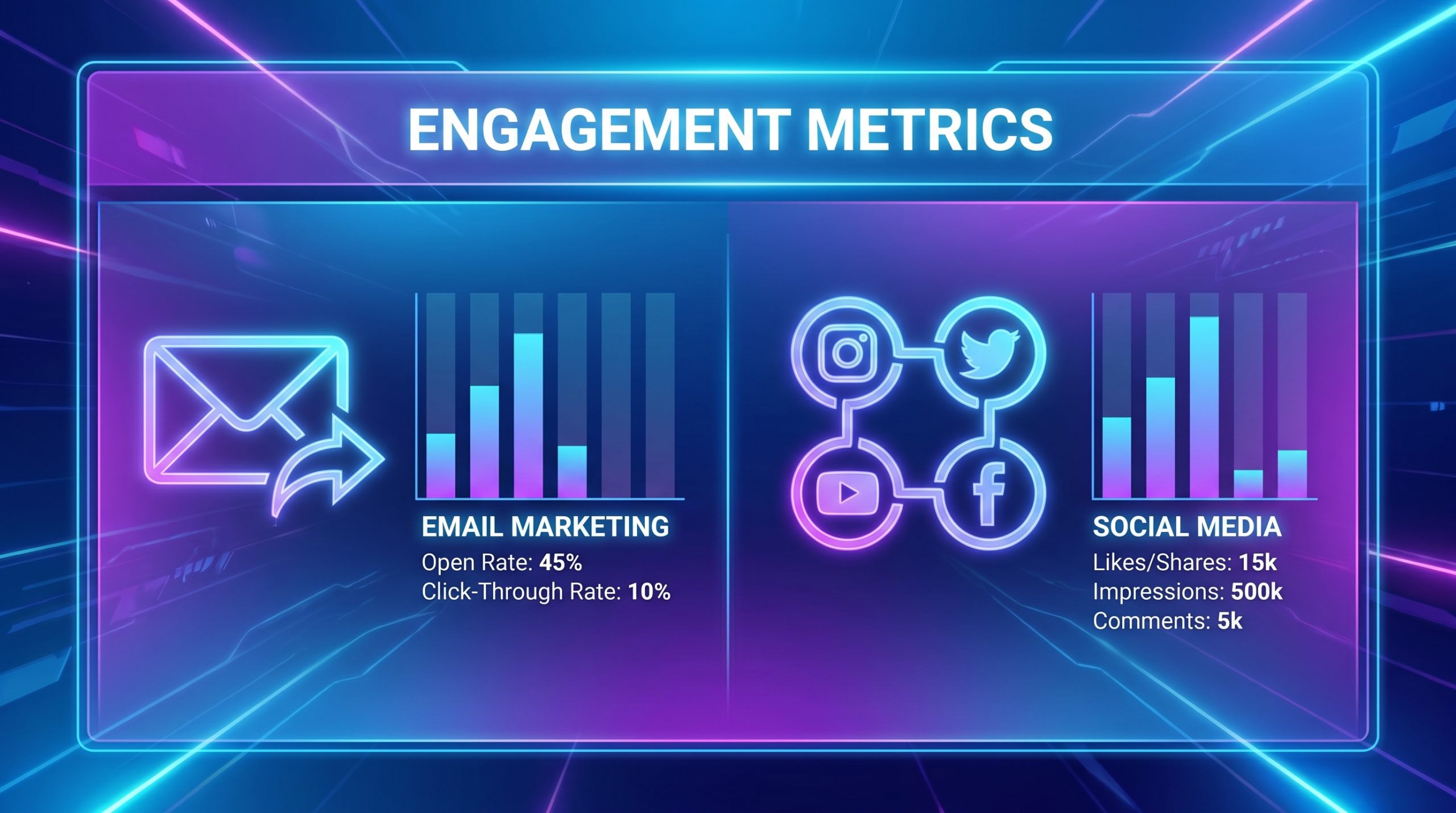
    Both channels work — but for very different reasons. Here’s what Calgary businesses need to know to make the right choice.

    One of the most common questions we hear at SoftYoug is: “Should I focus on email marketing or social media for my Calgary business?”

    It’s a fair question. Both channels can drive real results, but they work in fundamentally different ways. And the truth is, you probably shouldn’t have to choose just one. But to build the right strategy, you need to understand what each channel does best — especially for a local market like Calgary.

    Let’s break it down.

    Email vs Social Media: The Big Picture

    Aspect Email Marketing Social Media
    Ownership You own your list You rent the platform
    Reach Direct to inbox Algorithm-dependent
    Average Open/Engagement Rate 20–30% open rate 1–5% engagement rate
    Conversion Rate 2–5% average 0.5–2% average
    Cost $20–$300/month (platform) $500–$5,000/month (ads + content)
    Best For Nurturing, repeat sales, announcements Discovery, brand personality, community

    Cost Comparison for Calgary Businesses

    Email marketing is significantly cheaper. Platforms like Mailchimp, Constant Contact, or Klaviyo start at around $20/month for small lists. Your main costs are the platform subscription and potentially a copywriter or designer.

    Social media costs more because of the content engine required. You need graphics, videos, captions, and often paid advertising to get meaningful reach. A Calgary business investing in social media should budget at minimum $500/month for basic content and ads — and that’s on the low end.

    The bottom line: Email delivers a higher ROI per dollar spent. But that doesn’t mean you should ignore social.

    Engagement & Conversion Rates

    This is where the two channels really diverge:

    • Email consistently outperforms social for conversions. People who give you their email are already interested. They’re warmer leads. Opening rates of 20–30% and click rates of 2–5% are standard.
    • Social is better for discovery and top-of-funnel awareness. Most of your followers won’t buy directly from Instagram, but they’ll remember your brand when they need your service. Engagement rates of 1–3% on organic posts are considered good.
    • Social ads can scale fast — but require ongoing budget. Email scales through list growth, which is slower but more sustainable.

    When to Use Each Channel

    Use Email Marketing When You Want To:

    • Send personalized offers to existing customers
    • Nurture leads who aren’t ready to buy yet
    • Announce new products, services, or Calgary-specific events
    • Share educational content like guides and tips
    • Recover abandoned carts (for e-commerce businesses)

    Use Social Media When You Want To:

    • Build brand awareness in the Calgary community
    • Showcase your brand’s personality and behind-the-scenes content
    • Engage with local customers in real-time
    • Promote Calgary Stampede events, pop-ups, or special offers
    • Run targeted ads to specific Calgary neighbourhoods or demographics

    The Best Strategy? Use Both Together

    Here’s the secret: email and social media aren’t competitors. They’re teammates. The most successful Calgary businesses use them together in a coordinated strategy:

    • Use social to grow your email list. Run a lead gen campaign on Instagram or Facebook offering a discount or free guide in exchange for email signups.
    • Use email to drive social engagement. Include “Share this on Instagram” or “Tag a friend” CTAs in your email campaigns to amplify reach.
    • Retarget social visitors with email. Someone visited your site from Instagram? Capture their email via a pop-up and follow up with a tailored sequence.
    • Create Calgary-specific campaigns across both. Promote your Stampede sale through email AND social for maximum impact.

    When you combine the direct, personal reach of email with the broad, visual awareness power of social media, you get a marketing engine that’s greater than the sum of its parts.

    Want a Channel Strategy That Actually Works?

    At SoftYoug, we build integrated marketing strategies that combine the best of email and social for Calgary businesses. Let’s build yours.

    Call us: 639-999-8193

    Email: contact@softyoug.ca

  • How to Measure ROI on Your Digital Marketing Efforts

    How to Measure ROI on Your Digital Marketing Efforts

    How to Measure ROI on Your Digital Marketing Efforts

    Stop guessing which marketing channels are working. Here’s how to measure ROI like a pro — Calgary-style.

    You’re spending money on SEO, Google Ads, social media, and maybe a website redesign. But how do you know if any of it is actually working? If you’re a Calgary business owner nodding along right now, you’re not alone. Measuring marketing ROI is one of the biggest challenges we help our clients tackle at SoftYoug.

    The truth is, if you can’t measure it, you can’t improve it. And in a competitive market like Calgary — where every dollar counts — knowing exactly what you’re getting back from your marketing spend isn’t just nice to have. It’s essential.

    What Marketing ROI Actually Means

    At its simplest, marketing ROI (Return on Investment) tells you how much revenue your marketing efforts generate compared to what they cost. The basic formula is:

    ROI = (Revenue Generated – Marketing Cost) ÷ Marketing Cost × 100

    For example, if you spend $2,000 on Google Ads and generate $8,000 in sales, your ROI is 300%. That’s a solid return by any standard.

    But here’s where it gets tricky: not every marketing activity leads directly to a sale. Some build brand awareness, nurture leads, or improve customer loyalty. That’s why you need to track both direct ROI (immediate sales) and indirect ROI (brand lift, engagement, lifetime value).

    Key Metrics for Each Channel

    Website Performance

    Your website is the hub of your digital presence. Key metrics include:

    • Conversion Rate: The percentage of visitors who take a desired action (buy, book, call). Calgary benchmark: 2–5%.
    • Bounce Rate: Visitors who leave without interacting. Aim for under 50%.
    • Average Session Duration: How long people stay. Longer = more engaged.
    • Pages Per Session: Indicates how compelling your content is.

    SEO (Search Engine Optimization)

    SEO ROI takes time to show, but it compounds beautifully. Track these:

    • Organic Traffic: Visitors from search engines. Measure month-over-month growth.
    • Keyword Rankings: Where you rank for Calgary-specific searches like “Calgary plumber” or “best pizza in Kensington.”
    • Organic Conversion Rate: Are your organic visitors actually converting?
    • Local Pack Visibility: Your appearance in Google’s local 3-pack results.

    PPC / Google Ads

    PPC is the easiest channel to track ROI on because every click is measured. Key metrics:

    • Cost Per Click (CPC): What you pay each time someone clicks your ad.
    • Click-Through Rate (CTR): Percentage of people who see your ad and click. Calgary average: 3–6%.
    • Cost Per Acquisition (CPA): How much it costs to get one customer. This is your real ROI metric.
    • Quality Score: Google’s rating of your ad relevance. Higher scores = lower costs.

    Social Media

    Social ROI isn’t just about sales. Track both engagement and conversion metrics:

    • Engagement Rate: Likes, comments, shares divided by followers. 1–3% is good for organic.
    • Reach & Impressions: How many Calgary locals are seeing your content.
    • Social Referral Traffic: Visitors coming to your site from social platforms.
    • Social Conversion Rate: Sales attributed to social media campaigns.

    Tools to Track Your Marketing ROI

    You don’t need a massive tech stack. These tools are more than enough for most Calgary small businesses:

    • Google Analytics 4 (GA4): Free and essential. Tracks website traffic, conversions, and user behaviour.
    • Google Search Console: Free. Shows your search performance, keywords, and technical SEO issues.
    • Google Ads Dashboard: Built-in reporting for ad performance, CPA, and conversion tracking.
    • Meta Business Suite: Tracks Facebook and Instagram ad performance and organic insights.
    • HubSpot (Free CRM): Tracks leads from every channel and shows which sources drive the most conversions.
    • CallRail or similar: Tracks phone calls from your marketing — critical for Calgary service businesses.

    How to Calculate ROI Step by Step

    1. Set up conversion tracking in Google Analytics and your ad platforms. Define what a “conversion” means — a sale, a booked call, a form submission.
    2. Assign values to each conversion. If a typical customer spends $200, every booked call is worth $200 in potential revenue.
    3. Track all costs — ad spend, agency fees, software subscriptions, staff time. Be thorough.
    4. Calculate per channel: Use the formula above for each marketing channel individually.
    5. Compare and optimize: Shift budget from low-ROI channels to high-ROI ones. Repeat monthly.

    A Calgary-specific tip: Don’t forget to track offline conversions too. A customer might find you on Google, call your store in Bridgeland, and purchase in person. Use call tracking and promo codes to bridge the online-to-offline gap.

    Ready to Track Your Marketing ROI?

    At SoftYoug, we help Calgary businesses set up proper tracking and reporting so you always know what’s working. Let’s chat.

    Call us: 639-999-8193

    Email: contact@softyoug.ca

  • Digital Marketing Budget Guide for Calgary Small Businesses 2026

    Digital Marketing Budget Guide for Calgary Small Businesses 2026

    Digital Marketing Budget Guide for Calgary Small Businesses 2026

    How much should you spend on digital marketing in Calgary this year? We break down the numbers so you can plan with confidence.

    If you’re running a small business in Calgary, you’ve probably asked yourself: How much should I actually spend on digital marketing? It’s one of the most common questions we hear at SoftYoug, and the honest answer is — it depends. But that doesn’t mean we can’t give you a solid framework to work with.

    In 2026, Calgary’s digital landscape is more competitive than ever. From the growing tech scene in downtown to the bustling retail corridors in Kensington and Marda Loop, businesses are investing heavily in their online presence. The good news? You don’t need a Fortune 500 budget to compete. You just need a smart plan.

    How to Set Your Digital Marketing Budget

    Setting a marketing budget isn’t about picking a random number. It’s about aligning your spending with your business goals. Here’s the process we recommend:

    1. Define your goals — Are you looking to increase brand awareness, generate leads, boost online sales, or all three? Your goals determine where your money goes.
    2. Know your customer acquisition cost (CAC) — Calculate how much it costs to acquire one customer through each channel. This helps you identify which channels are worth scaling.
    3. Audit your current performance — What’s working? What isn’t? Redirect budget from underperforming channels to high-ROI ones.
    4. Start with benchmarks — Use industry-standard percentages as a starting point, then adjust based on your specific situation.
    5. Build in flexibility — Leave 10–15% of your budget for testing new channels or capitalizing on unexpected opportunities.

    Percentage of Revenue Guidelines

    Industry benchmarks suggest that most Calgary small businesses should allocate 7–12% of their gross revenue to marketing. Here’s how that breaks down by business stage:

    • Startups & New Businesses (12–20%): If you’re building brand awareness from scratch, you’ll need to invest more aggressively. Expect to spend 12–20% of revenue on marketing.
    • Growing Businesses (8–12%): Established businesses with some brand recognition can typically maintain growth with 8–12% of revenue allocated to marketing.
    • Established Businesses (6–8%): If you have a strong reputation and steady customer flow, 6–8% may be sufficient to maintain and gently grow your market share.

    For a Calgary business doing $500,000 in annual revenue, that means a marketing budget of $35,000 to $60,000 per year — roughly $2,900 to $5,000 per month.

    Cost Breakdown by Channel

    Search Engine Optimization (SEO)

    SEO is the long game, but it pays off massively over time. For Calgary businesses targeting local searches like “best coffee in Calgary” or “plumber in NE Calgary,” SEO is essential.

    • Monthly retainer: $1,500–$4,000/month
    • One-time project (audit + optimization): $3,000–$7,500
    • Timeline to see results: 3–6 months
    • Best for: Local service businesses, restaurants, professional services

    Google Ads (PPC)

    Google Ads gives you immediate visibility. In Calgary, competition varies by industry — legal and medical keywords are pricey, while niche services can be quite affordable.

    • Monthly ad spend: $1,000–$5,000+ (excluding management fees)
    • Management fees: $500–$2,000/month (typically 10–20% of ad spend)
    • Average CPC in Calgary: $2–$8 depending on industry
    • Best for: Time-sensitive promotions, new businesses, high-ticket services

    Social Media Marketing

    Calgary audiences are active on Instagram, Facebook, LinkedIn, and increasingly TikTok. Social media is great for building community and brand personality.

    • Organic management: $1,000–$3,000/month (content creation + posting)
    • Social ad spend: $500–$3,000/month
    • Influencer collaborations: $200–$2,000 per campaign
    • Best for: Retail, hospitality, B2C brands, visual products

    Web Design & Development

    Your website is your digital storefront. A poor website will waste every dollar you spend on traffic.

    • Basic website redesign: $3,000–$8,000
    • E-commerce site: $8,000–$20,000
    • Monthly maintenance: $150–$500/month
    • Best for: Any business without a modern, mobile-friendly website

    Sample Budgets for Different Business Sizes

    Small Local Business (Revenue: $250K/year)

    Monthly Budget: $1,500–$2,500

    • SEO: $800
    • Google Ads: $500
    • Social Media: $500
    • Website Maintenance: $200

    Growing Mid-Size Business (Revenue: $1M/year)

    Monthly Budget: $5,000–$8,000

    • SEO: $2,000
    • Google Ads: $2,000
    • Social Media: $1,500
    • Content Marketing: $1,000
    • Website: $500

    Established Enterprise (Revenue: $5M+/year)

    Monthly Budget: $15,000–$30,000

    • SEO: $4,000
    • Google Ads: $8,000
    • Social Media: $5,000
    • Content + PR: $3,000
    • Website: $2,000
    • Analytics & Tools: $1,000

    Need Help Building Your Marketing Budget?

    At SoftYoug, we help Calgary businesses create data-driven marketing plans that deliver real results. Let’s talk about your goals.

    Call us: 639-999-8193

    Email: contact@softyoug.ca

  • Retargeting Strategies for Calgary E-commerce Businesses

    Retargeting Strategies for Calgary E-commerce Businesses

    Retargeting Strategies for Calgary E-commerce Businesses

    Turn window-shoppers into paying customers with these proven retargeting tactics

    You’ve done the hard part — you’ve driven traffic to your Calgary e-commerce store. People are browsing your products, adding items to their cart, and then… they leave. It happens all the time. In fact, the average cart abandonment rate across e-commerce is nearly 70%.

    But here’s the good news: those visitors aren’t lost forever. With the right retargeting strategy, you can bring them back and convert them into customers. Let’s explore how Calgary e-commerce businesses can make retargeting work.

    What Is Retargeting?

    Retargeting (also called remarketing) is a digital advertising strategy that shows ads to people who have already visited your website or interacted with your brand. It works by placing a small piece of code (a pixel) on your site that tracks visitors. Later, you can show them ads on Google, Facebook, Instagram, or other platforms.

    For Calgary e-commerce businesses, retargeting is especially powerful because it reduces wasted ad spend. You’re not showing ads to strangers — you’re reconnecting with people who already showed interest.

    5 Retargeting Strategies for Calgary E-commerce

    1. Retarget General Site Visitors with Brand Reminders

      Not every visitor is ready to buy on their first visit. That’s okay. Use retargeting to keep your brand top of mind.

      • Show display ads featuring your best-selling products or a special offer.
      • Use a 7-day window — target visitors who came to your site in the past week.
      • Segment by pages visited: someone who browsed your “Winter Boots” category should see boot ads, not your homepage.

      The goal is simple: remind them you exist and give them a reason to come back.

    2. Target Cart Abandoners with Urgency

      This is the highest-converting retargeting strategy. Someone added items to their cart but didn’t check out. Now’s your chance.

      • Send a Facebook or Instagram ad showing the exact products left in their cart.
      • Include a time-limited discount: “Complete your order in the next 24 hours for 10% off.”
      • Use Google Dynamic Remarketing to serve product-specific ads across the Google Display Network.
      • Combine with an email retargeting sequence — send a reminder within 1 hour, then a follow-up with an incentive 24 hours later.
      Pro Tip: Calgary shoppers love free shipping. If margins allow, offer free shipping on abandoned carts — it often outperforms percentage discounts.
    3. Upsell and Cross-Sell to Past Customers

      Your past customers are your most valuable audience. They already trust you and know your product quality. Retarget them with complementary products.

      • If someone bought a yoga mat, retarget them with yoga blocks or a carry strap.
      • Set a 30-day post-purchase window before showing upsell ads.
      • Use Facebook’s Custom Audiences to upload your customer email list and exclude recent buyers.

      A Calgary outdoor gear store, for example, could retarget past tent purchasers with camping stove or sleeping bag ads as summer approaches.

    4. Use Social Media Retargeting (Facebook & Instagram)

      Social platforms have powerful retargeting tools. You can reach Calgary shoppers based on their specific interactions with your brand.

      • Website visitors: Show ads to anyone who visited your store in the last 30 days.
      • Video viewers: Retarget people who watched at least 50% of your product video.
      • Engaged users: Target people who liked, commented, or shared your posts.
      • Page followers: Show exclusive offers to your Instagram and Facebook followers.

      Layer these audiences to create a retargeting funnel: broad awareness first, then narrower offers for warmer audiences.

    5. Combine Email and Ad Retargeting

      The strongest retargeting strategies use multiple channels. Email and paid ads together are more powerful than either alone.

      • Use email to deliver personalized product recommendations based on browsing history.
      • Reinforce the email message with Facebook or Instagram ads showing the same products.
      • Set up a drip sequence: Day 1 email + ad, Day 3 email + ad with social proof (reviews), Day 7 email + ad with a discount.

      This multi-channel approach works because it meets Calgary shoppers where they are — whether that’s in their inbox or scrolling Instagram on their commute.

    Conversion Tips for Your Retargeting Campaigns

    Running retargeting ads is one thing. Making them convert is another. Here are tips tailored for Calgary e-commerce businesses:

    • Keep frequency in check: Showing the same ad 10 times feels creepy. Cap frequency at 3–5 impressions per week per user.
    • Use dynamic product ads: Show the exact products users viewed rather than generic ads. They convert at 2–3x higher rates.
    • Segment by recency: Visitors from 1 day ago need a different message than visitors from 2 weeks ago. Recent visitors get new arrivals; older visitors get discounts.
    • Localize your creative: Use Calgary imagery — the skyline, the mountains, local landmarks — to build familiarity and trust.
    • A/B test everything: Test different headlines, images, offers, and CTAs. Calgary audiences respond differently to different messaging.

    Measuring Success

    Track these metrics to know if your retargeting is working:

    • Clickthrough rate (CTR): Above 1% is good for retargeting; above 2% is excellent.
    • Conversion rate: Retargeting should convert at 2–5x higher rates than cold traffic.
    • Return on ad spend (ROAS): Aim for 4:1 or higher on retargeting campaigns.
    • Assisted conversions: Some retargeting clicks don’t convert immediately but help later. Track assisted conversions in Google Analytics.

    Retargeting is one of the highest-ROI advertising strategies available to Calgary e-commerce businesses. When done right, every dollar you spend bringing back a warm lead is a dollar well spent.

    Let Softyoug Set Up Your Retargeting Campaigns

    We help Calgary e-commerce businesses recover lost revenue with smart retargeting strategies. Get in touch.

    639-999-8193

  • How to Reduce Your Google Ads Cost Per Click in Calgary

    How to Reduce Your Google Ads Cost Per Click in Calgary

    How to Reduce Your Google Ads Cost Per Click in Calgary

    7 proven strategies to lower your CPC and get more from your Calgary ad budget

    If you’re running Google Ads for your Calgary business, you’ve probably watched your cost per click creep up over time. One day you’re paying $3 per click, the next it’s $6, and your budget is evaporating fast.

    The good news? You’re not powerless. There are concrete, proven strategies to lower your CPC without sacrificing traffic or conversions. Let’s walk through 7 of them.

    What Is Cost Per Click (CPC)?

    CPC is the amount you pay each time someone clicks on your Google ad. Your actual CPC is determined by an auction system that considers your maximum bid, your Quality Score, ad relevance, and expected clickthrough rate. The higher your ad quality, the less you pay for each click.

    In Calgary, average CPCs vary by industry: home services might see $5–$10, while legal or medical could hit $15–$30. Lowering your CPC means getting the same clicks for less money — or more clicks for the same budget.

    7 Strategies to Lower Your Google Ads CPC

    Here are seven actionable strategies, ranked from fastest to implement to most strategic.

    1. Refine Your Keyword Strategy

      Broad keywords are expensive and attract irrelevant clicks. The fix is to get more specific.

      • Use long-tail keywords like “affordable plumber in NW Calgary” instead of “plumber Calgary.”
      • Add location-specific terms — “Calgary,” “YYC,” “downtown,” “Kensington,” “Sage Hill.”
      • Use phrase match and exact match instead of broad match to control who sees your ad.

      Long-tail keywords cost less because they have lower competition, but they convert better because they match exactly what the searcher wants.

    2. Improve Your Quality Score

      Your Quality Score is Google’s rating of your ad relevance. A higher score = lower CPC. Quality Score is based on three things:

      • Expected CTR: Use compelling ad copy that speaks to Calgary audiences (e.g., “Serving Calgary since 2010”).
      • Ad relevance: Make sure your ad copy matches your keyword and landing page.
      • Landing page experience: Fast load times, mobile-friendly design, and clear calls-to-action.
      Pro Tip: Even a 1-point increase in Quality Score can reduce your CPC by 10–20%.
    3. Use Ad Extensions

      Ad extensions improve your ad’s visibility, clickthrough rate, and Quality Score — all of which lower CPC.

      • Location extension: Show your Calgary address so people know you’re local.
      • Call extension: Add your phone number (639-999-8193) for mobile users.
      • Sitelink extensions: Link to specific pages (Services, About, Contact).
      • Callout extensions: Highlight free quotes, 24/7 service, or same-day service.
    4. Tighten Your Location Targeting

      If you’re a Calgary business, make sure you’re only showing ads to people in Calgary or nearby areas. Don’t pay for clicks from Edmonton or Vancouver.

      • Set location targeting to Calgary and specific neighbourhoods you serve.
      • Use “Presence” targeting instead of “Interest” targeting so only people physically in Calgary see your ad.
      • Exclude locations outside your service area to avoid wasted spend.
    5. Add Negative Keywords Regularly

      Negative keywords prevent your ad from showing for irrelevant searches. They’re one of the fastest ways to reduce wasted clicks.

      • Review your search terms report weekly to find irrelevant queries.
      • Add negatives like “free,” “DIY,” “cheap” if you don’t offer those.
      • For Calgary businesses, consider adding other city names if you only serve Calgary.

      Every irrelevant click you block is money saved and a tighter CPC.

    6. Optimize Your Ad Schedule

      Not every hour of the day is equally valuable. If your Calgary business gets calls between 9 AM and 5 PM, why pay for ads at 2 AM?

      • Check your analytics to find your peak conversion hours.
      • Use ad scheduling (dayparting) to run ads only during those hours.
      • Consider bid adjustments — lower bids in low-performing hours instead of turning ads off entirely.
    7. Optimize Your Landing Pages for Conversion

      Here’s a fact that surprises many Calgary business owners: your landing page quality directly affects your CPC. Google rewards ads that send people to relevant, fast, mobile-friendly pages.

      • Make sure your landing page loads in under 2 seconds.
      • Use clear headlines that match your ad copy.
      • Include Calgary-specific content — mention neighbourhoods, landmarks, or local testimonials.
      • Have one clear call-to-action per page (Call Now, Get a Quote, Book Today).

      A well-optimized landing page improves your conversion rate AND lowers your CPC — a double win.

    Track Your Progress

    Implementing these strategies isn’t a one-time fix. Google Ads requires ongoing optimization. Track your average CPC, Quality Score, and conversion rate weekly. Small improvements compound over time.

    And remember: the cheapest click isn’t always the best click. Focus on lowering CPC while maintaining or improving your conversion rate.

    Want Us to Optimize Your Google Ads?

    Softyoug manages Google Ads campaigns for Calgary businesses. Let us lower your CPC and increase your ROI.

    639-999-8193

  • Google Ads vs Facebook Ads: Which is Better for Calgary Businesses?

    Google Ads vs Facebook Ads: Which is Better for Calgary Businesses?

    Google Ads vs Facebook Ads: Which is Better for Calgary Businesses?

    A practical comparison to help Calgary brands choose the right advertising platform

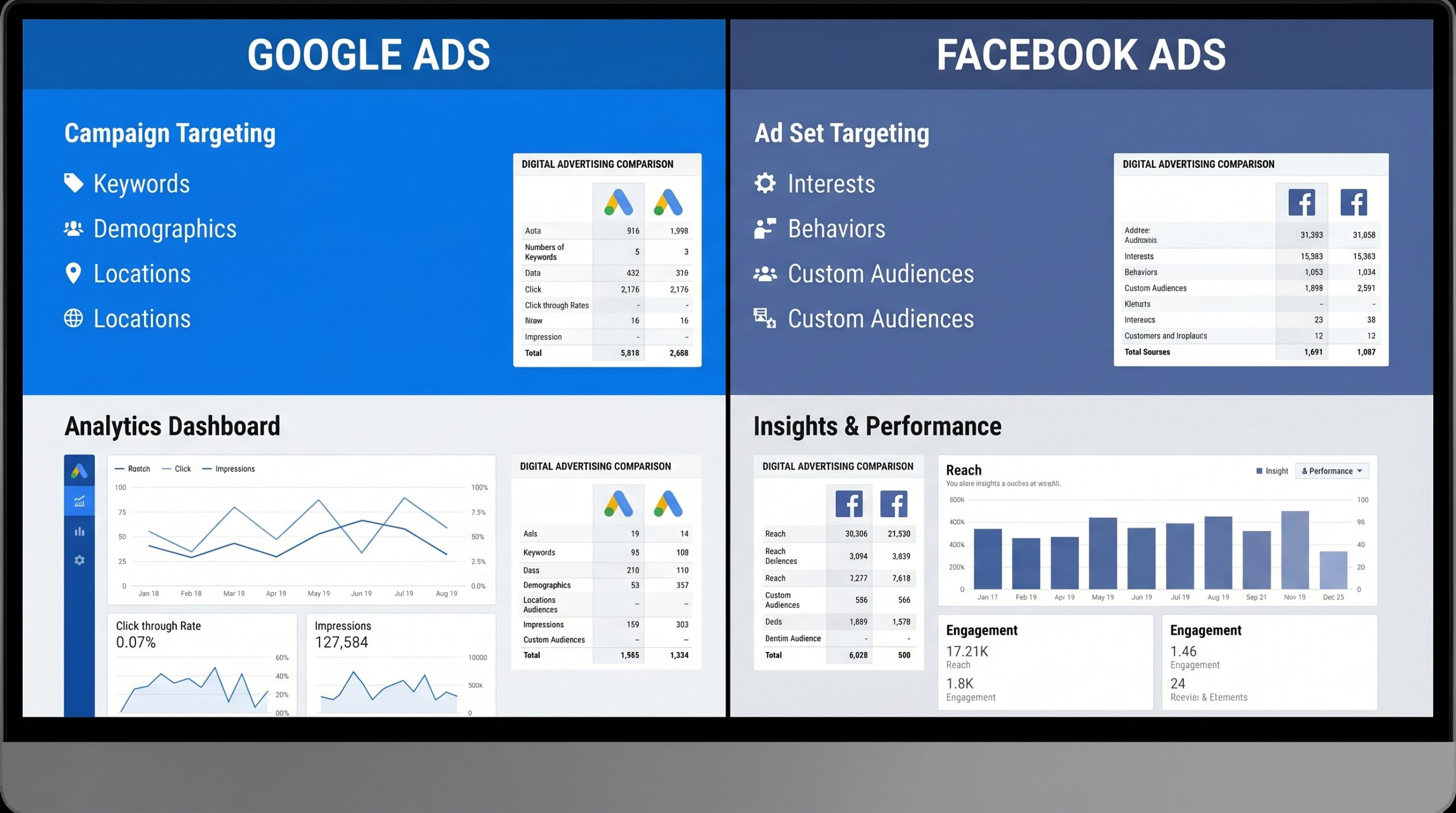
    Every Calgary business owner wants more customers. But when it comes to paid advertising, the big question is always the same: should I put my money into Google Ads or Facebook Ads?

    The answer isn’t one-size-fits-all. Both platforms are powerful, but they work differently and serve different goals. Let’s compare them for the Calgary market.

    How Google Ads and Facebook Ads Work

    Before we compare costs and targeting, it helps to understand the fundamental difference between these two platforms.

    Google Ads: Intent-Based Advertising

    Google Ads captures people who are actively searching for what you offer. When someone in Calgary types “plumber near me” or “best pizza in Kensington,” Google Ads puts your business in front of them. You’re catching them at the moment of intent — they already need what you sell.

    Facebook Ads: Interest-Based Advertising

    Facebook Ads (which also covers Instagram) finds people who might be interested in your product, even if they aren’t actively searching for it. You target by demographics, interests, behaviours, and location. You’re creating demand rather than capturing it.

    Head-to-Head Comparison for Calgary Audiences

    Factor Google Ads Facebook Ads
    Best for Capturing ready-to-buy customers Building brand awareness and generating leads
    Targeting in Calgary Keywords + location (e.g., “Calgary dentist”) Demographics, interests, behaviours + Calgary radius
    Average CPC (Calgary) $3–$15 (varies by industry; legal/medical is higher) $0.50–$3.00 (lower cost per click, but lower intent)
    Ad Formats Text ads, Shopping ads, Local Service ads, Display Image, Video, Carousel, Stories, Dynamic ads
    Speed of Results Fast — can get clicks within hours of launching Slower — needs time for algorithm optimization
    Best Calgary Industries Home services, healthcare, legal, auto, restaurants Retail, e-commerce, fitness, events, hospitality

    Costs: Where Does Your Budget Go Further?

    For Calgary businesses, ad costs can vary significantly by industry. Here’s a rough guide:

    • Google Ads (Search): Higher CPC but higher conversion intent. A $5 click from someone searching “Calgary emergency plumber” is often worth more than a $1 click from someone scrolling Facebook.
    • Facebook Ads: Lower CPC, but you’ll need more impressions and clicks to get a conversion. Great for remarketing and building awareness.

    If you have a tight budget (under $1,000/month), Facebook Ads often give you more bang for your buck — you get more impressions and can test creative quickly. If you have a larger budget and want immediate leads, Google Ads is the faster path.

    Targeting Options Compared

    This is where the platforms truly differ.

    Google Ads Targeting

    • Keywords: Target people searching for specific terms
    • Location: Calgary, neighbourhoods, or a radius around your business
    • Audiences: Remarketing, in-market, and custom intent audiences
    • Demographics: Age, gender, household income

    Facebook Ads Targeting

    • Location: Calgary city, postal code, or radius targeting
    • Interests: Hobbies, pages liked, purchase behaviour
    • Demographics: Detailed age, income, education, life events
    • Custom Audiences: Upload your customer list to retarget
    • Lookalike Audiences: Find new Calgary customers who resemble your best ones

    When to Use Each Platform (or Both)

    Here’s our recommended approach for Calgary businesses:

    Use Google Ads When…

    • People search for your service or product every day (plumbers, electricians, lawyers, dentists)
    • You want leads you can track and measure immediately
    • You have a service area business (you serve specific Calgary neighbourhoods)

    Use Facebook Ads When…

    • Your product is visual and emotionally driven (fashion, fitness, food, decor)
    • You want to build brand awareness in the Calgary market
    • You need to retarget website visitors or past customers

    Use Both (The Best Strategy) When…

    • You have a budget of $2,000+/month
    • You want to capture intent (Google) AND build awareness (Facebook)
    • You can afford to test, learn, and optimize both channels over 3+ months

    The most successful Calgary businesses we work with use both platforms in a complementary way. Google Ads captures the low-hanging fruit — people ready to buy. Facebook Ads nurtures everyone else until they’re ready.

    Not Sure Which Platform is Right for You?

    Softyoug helps Calgary businesses build Google Ads and Facebook Ads strategies that actually work. Let’s find the right mix for your brand.

    639-999-8193

  • The Power of User-Generated Content for Calgary Brands

    The Power of User-Generated Content for Calgary Brands

    The Power of User-Generated Content for Calgary Brands

    Why your customers’ photos and videos are your most powerful marketing asset

    Imagine this: a customer posts a photo of themselves enjoying your product at a Calgary park. Their friends see it, like it, and ask where they got it. That one photo just did more for your brand than any polished ad campaign could.

    That’s the power of user-generated content (UGC), and Calgary businesses are perfectly positioned to take advantage of it.

    What Is User-Generated Content?

    UGC is any content — photos, videos, reviews, testimonials, social media posts — created by your customers rather than your brand. It’s authentic, relatable, and trusted. In fact, studies show that 79% of people say UGC highly impacts their purchasing decisions. That’s higher than any other form of marketing.

    For Calgary brands, UGC is especially valuable because it showcases real people in real Calgary settings — your product at Prince’s Island Park, your service in a Calgary home, your food on a patio along 17th Avenue.

    5 Ways Calgary Businesses Can Leverage UGC

    1. Feature Customer Photos on Your Website and Social Media

    The simplest way to use UGC is to reshare content your customers are already posting. When a customer tags your Calgary business in an Instagram photo, ask for permission and share it on your own feed, Stories, or website.

    • Create a dedicated “Customer Spotlight” series on your Instagram Stories.
    • Add a UGC gallery to your website homepage showing customers enjoying your products.
    • Use a hashtag like #MyCalgaryBrand or #YYCLoves[YourBrand] to collect posts.

    2. Use Customer Reviews as Social Proof

    Reviews are a form of UGC that converts. Calgary shoppers research before they buy. A glowing review from a fellow Calgarian carries huge weight.

    • Feature your best Google Reviews on your website and in email marketing.
    • Turn a great review into a graphic for Instagram or Facebook.
    • Create a “Wall of Love” page on your site with customer testimonials.

    3. Run a Calgary-Themed UGC Contest

    People love a chance to win. Run a contest that encourages customers to create content around a Calgary theme.

    • Ask customers to share photos of your product at their favourite Calgary spot.
    • Offer a prize — a free product, a discount, or a Calgary experience package.
    • Use a specific hashtag and feature the best entries on your channels.
    Pro Tip: The Calgary Stampede is a goldmine for UGC. Run a contest during Stampede week and watch the submissions roll in.

    4. Partner With Calgary Micro-Influencers

    Micro-influencers (1,000–10,000 followers) often have higher engagement rates than big celebrities. And many of them are right here in Calgary.

    • Identify Calgary-based influencers whose audience matches yours.
    • Send them your product or offer a free service in exchange for an honest post.
    • Repurpose their content as UGC across your marketing channels.

    5. Build a Community Around Your Brand

    The best UGC comes from loyal customers who feel connected to your brand. Build that connection by creating a community.

    • Start a Facebook group for Calgary customers of your brand.
    • Encourage sharing by creating a branded hashtag and featuring users regularly.
    • Respond to every post and comment — engagement breeds more engagement.

    Examples of UGC Done Right by Calgary Brands

    Calgary businesses are already crushing it with UGC. Local coffee roasters share customer flat-lay photos. Fitness studios repost members’ workout selfies. Clothing boutiques showcase customers wearing their finds around the city. The common thread? They make their customers the heroes of the story.

    You don’t need a massive budget to replicate this. Start small. Ask one happy customer a week for permission to share their content.

    How to Encourage Customers to Create Content

    Not every customer will naturally post about your brand. Sometimes you need to nudge them. Here’s how:

    • Ask at the right moment: Right after a purchase or a great service experience, send a follow-up asking for a photo or review.
    • Make it easy: Create a simple landing page where customers can upload photos. Include clear instructions.
    • Incentivize: Offer a small discount or entry into a monthly draw for every customer who submits content.
    • Show appreciation: When someone creates content for you, thank them publicly and personally. Recognition is a powerful motivator.

    The more you celebrate your customers, the more they’ll want to celebrate you.

    Ready to Harness the Power of UGC?

    Softyoug helps Calgary brands build UGC strategies that drive trust and sales. Let’s talk about your brand.

    639-999-8193